
Blog
Why You Can’t Achieve 20/20 Hearing with Hearing Aids
- February 26, 2026
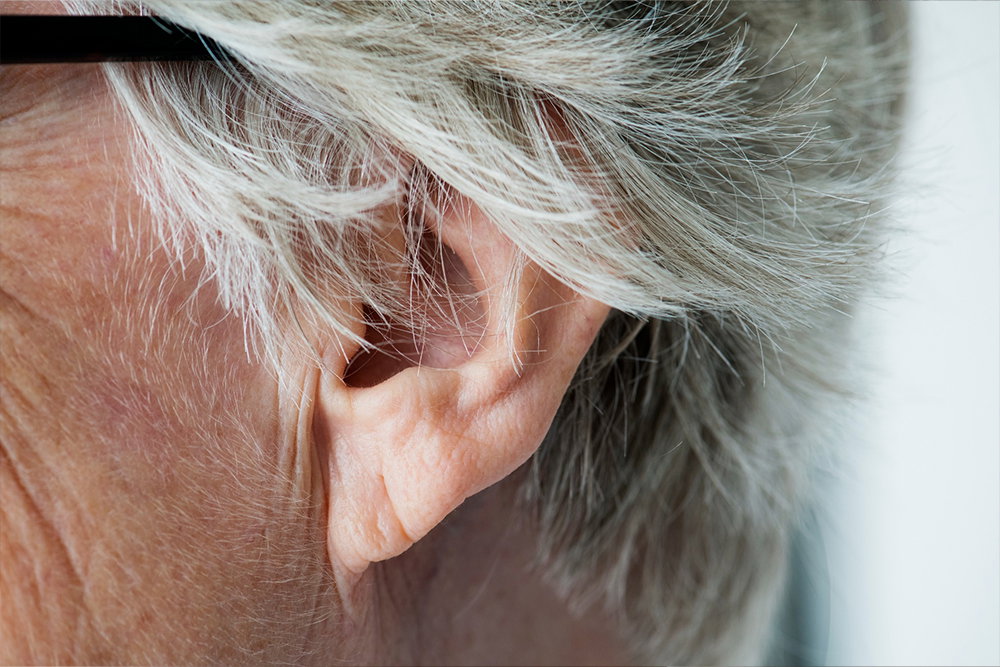
When people think about “perfect” sensory performance, they often refer to 20/20 vision. It’s natural to question whether an equivalent standard exists for hearing — and why hearing aids can’t simply restore hearing to that level. The short answer: hearing and vision function very differently, and hearing loss typically involves permanent structural damage that amplification alone cannot fix.
This blog unpacks the science, the technology, and the expectations — with evidencebased explanations from current hearinghealth research.
There Is No Such Thing as “20/20 Hearing”
Unlike vision, hearing cannot be summarized by a single score. Vision tests measure spatial acuity at a fixed distance, producing an easy-to-understand fraction (like 20/20). Hearing, however, is multidimensional, requiring measurement across frequency (pitch) and intensity (loudness). A single number cannot describe the complexity of hearing function.
Whereas glasses can refocus light onto a healthy retina, most hearing loss arises from damage to the inner ear’s hair cells — sensory structures that cannot regenerate. Because of this, no device can restore hearing to its original state.
Hearing Aids Do Not Restore Hearing — they help use the hearing that is left to compensate for the hearing loss.
Hearing aids amplify sound so remaining hair cells can detect it, but they do not correct or replace damaged innerear structures. This is fundamentally different from eyeglasses, which directly correct the optical error to produce clear 20/20 vision.
Even with advanced technology, hearing aids and cochlear implants cannot restore auditory function to normal. They provide significant benefit, but not true replication of natural hearing.
Hearing Is Processed by the Brain — and That Takes Time to Relearn
Another reason hearing aids cannot instantly produce “normal” hearing is that the brain must relearn how to interpret sound.
Users often report that after first wearing hearing aids, everyday sounds — including their own voice — can seem too loud or distorted. This is because the auditory cortex must adjust to signals it hasn’t processed in years, unlike vision, where correction is immediate.
This “auditory rehabilitation” period can involve listening exercises (LACE), practice in various environments, and followup fine-tuning by your audiologist.
Background Noise Makes Perfect Hearing Impossible
One of the hardest tasks for hearing aids is distinguishing speech from background noise. While modern digital aids use AI algorithms, sensors and directional microphones to enhance speech, they still cannot replicate the human earbrain system’s full filtering ability.
This means environments like restaurants, parties, and busy streets often remain challenging — not because the device is failing, but because no current technology can mimic the natural complexity of auditory processing.
Hearing Loss Is Not Uniform Across Frequencies
Vision problems (like nearsightedness) typically affect clarity in a consistent way. Hearing loss, however, often affects specific frequency ranges.
For example, a person may hear lowpitch sounds well but struggle with high-frequency consonants like s, f, or th.
A single “20/20 hearing” score cannot account for such variability — and amplification can only partially compensate for these uneven patterns.
Why We Should Stop Comparing Hearing Aids to Glasses
It’s tempting to think hearing aids should work like eyeglasses — simple, immediate fixes. But hearing loss is neurological, structural, and frequencyspecific, making the comparison inaccurate and misleading.
Glasses correct predictable optical distortion.
Hearing aids enhance sound but rely on impaired biological structures and a brain that must adapt.
The expectation of “perfect hearing” sets users up for disappointment. A more realistic goal is better hearing, not normal hearing.
Hearing aids provide tremendous benefits — better communication, cognitive support, and improved quality of life. But they cannot:
- Regenerate damaged innerear cells
- Deliver perfectly balanced frequency perception
- Fully filter background noise
- Recreate natural auditory processing
Understanding these limitations help set realistic expectations and encourages users to embrace the rehabilitation journey rather than expecting an instant cure.
Quick Links
Delray Beach Office
Opening Hours:
Monday to Friday: 9am – 5pm
Boynton Beach Office
Opening Hours:
Monday to Friday: 9am – 5pm
Jupiter Office
Opening Hours:
Monday to Friday: 9am – 5pm
Copyright © 2026 Hearing Partners of South Florida. All rights reserved.
